
Professor Aaron W. Hughes is the grandson of Mohamad and Maryam al-Noghedi (aka Bud and May Alley), one of the founding families of Canada’s first mosque in Canada, Edmonton’s Al-Rashid (1938). Trained in classical Islamic texts, he now works on the history of Muslims and Islam in Canada.
In this new blog series, Aaron will be merging his long-time studies of Muslims across the country with materials from our collections at the Muslims in Canada Archives (MiCA) to spotlight the stories of prominent Muslim Canadians. His first blog traces the story of a Canadian Imam...
I have often had conversations with friends and families about who they think the greatest Canadian Muslim was or is. It is a tough question and I certainly realize it is a big ask. There have been many candidates put forward to me over the years. Peter Baker. Hilwie Hamdon. James Ailley. Fuad Sahin. Lila Fahlman. Hanny Hassan. Maher Arar. Yasmin Rantansi. And, perhaps in good Canadian fashion, Nazem Kadri (how many Canadian Muslims, after all, have brought the Stanly Cup to their mosque!). The list goes on and on. And I have left many names out to entice readers to write me (aaron.hughes@rochester.edu) and offer their own suggestions (and, of course, rationales). In what I hope will be a recurring feature of the Muslims in Canada Archives website, allow me to offer brief snapshots of these individuals, especially as they become animated through our holdings, over the coming months.
To inaugurate this semi-regular feature, I thought I might focus on a perhaps unusual choice. Not unusual in the sense that his inclusion would be provocative. But unusual in the sense that I doubt anyone has thought of the individual I have in mind as a Canadian Muslim. Having recently passed Imamat Day on February 4—the day that marks the transition of the Imamat (the institution of Ismaili Muslim leadership) from the previous Imam to the new one (in this case from Prince Karim Aga Khan IV to Prince Rahim Aga Khan V), allow me to make the case for the former, namely, Aga Khan IV. 
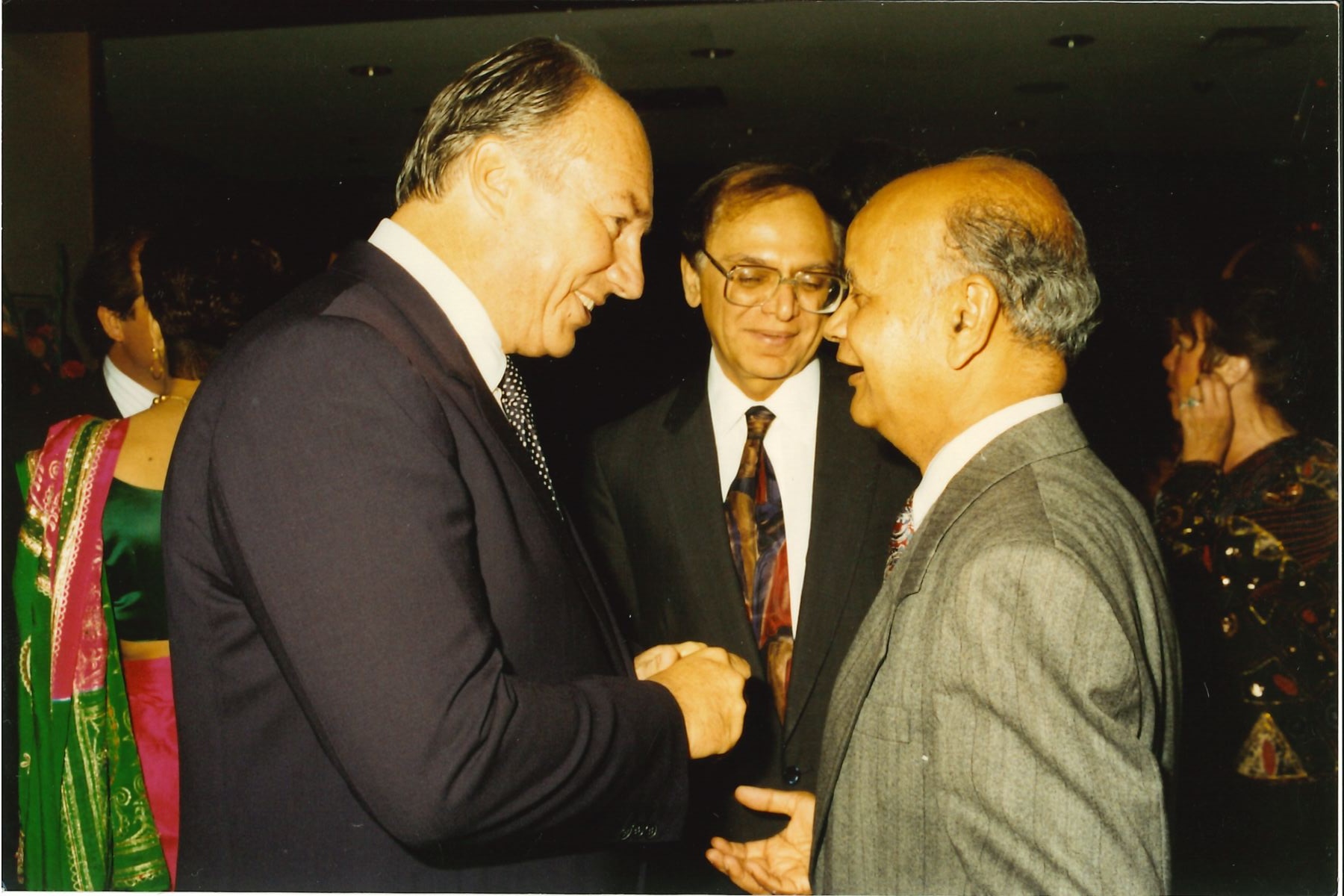
.png)
In May 2010, another Prime Minister, Stephen Harper, joined Aga Khan IV in Toronto’s Don Mills neighbourhood to break ground for a new museum, Ismaili Centre and park. At the same ceremony, the Prime Minister, on behalf of the Government of Canada, bestowed an honour that had only been given five times previously in Canadian history: honorary citizenship. “Now you are Canadian,” said the smiling Prime Minister with his hand outstretched to the Aga Khan, who, in turn, replied, “I have always felt at home in Canada, but never more so than today.”
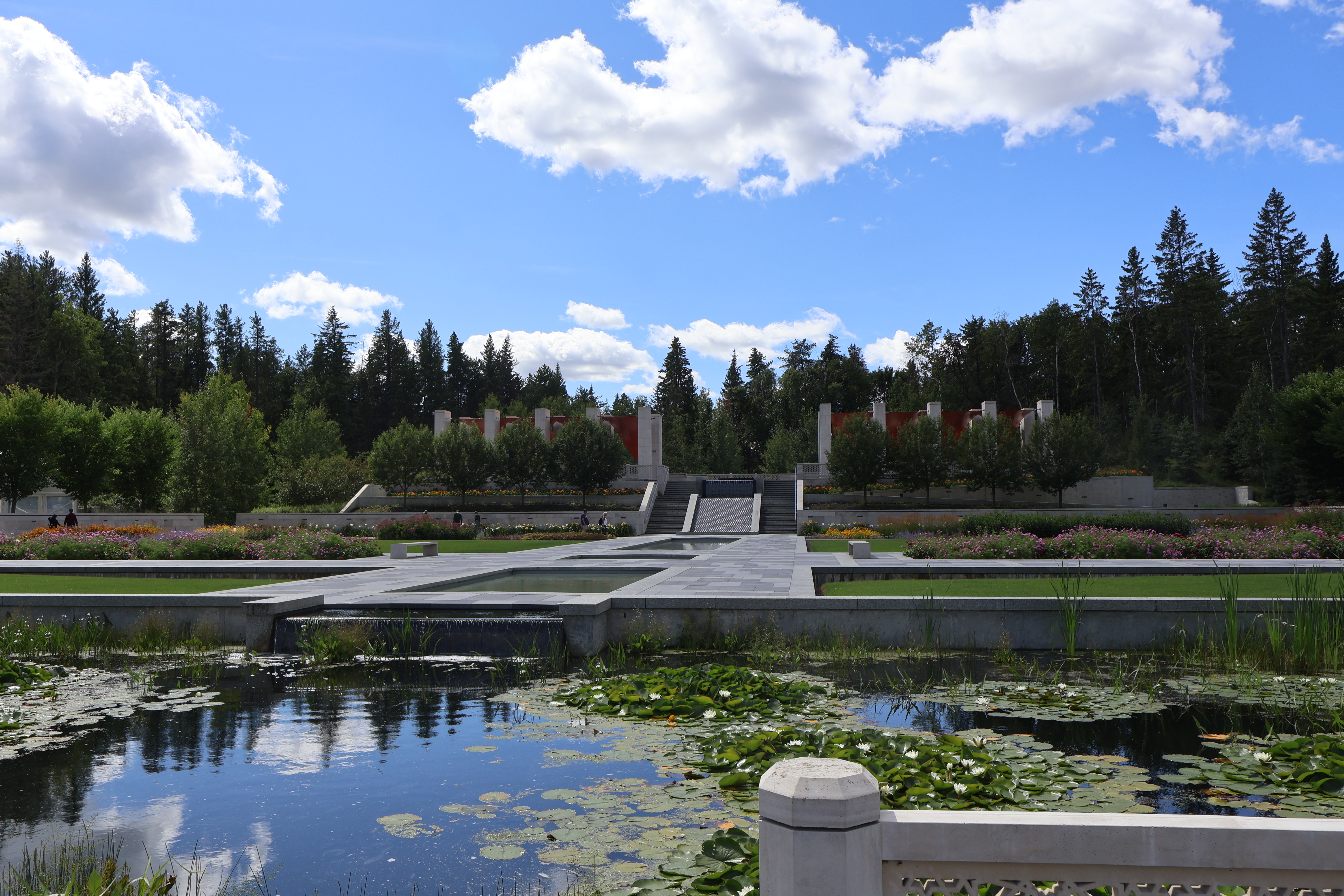
Anyone who has visited what is now called the Aga Khan Museum (AKM) in Toronto, the Aga Khan Gardens in Edmonton’s Devonian Gardens, or walked past the Global Centre for Pluralism and the Delegation of the Ismaili Imamat (a de facto Ismaili embassy) on Ottawa’s famed Sussex Drive will have encountered Aga Khan IV’s vision. That vision, as he made clear in his remarks to open the Global Centre for Pluralism in October of 2006, is predicated on, in his own words, “fascination” with “Canada’s experience as a successful pluralistic society,” before going on to note that our country is a model “which can help to teach and inspire the entire world.” The Aga Khan, thus, envisioned Canada as a role model for other nations. And the Centre, in official conjunction with the Government of Canada, claims a commitment to the idea of promoting pluralism as the potential to bring different—often hostilely different—sides together to understand and appreciate difference, end marginalization and provide equal opportunities.
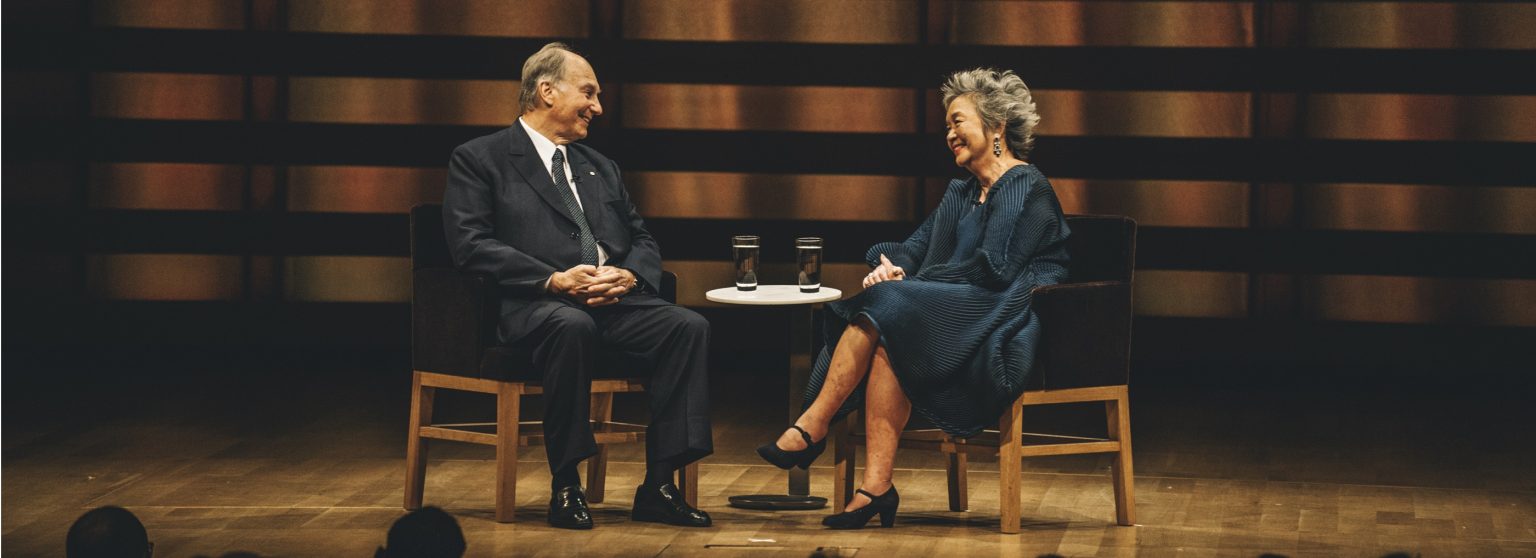
As we follow the recent visit of His Highness Prince Rahim Aga Khan V, I think we—regardless of our religion, and regardless of our own denominational commitments—celebrate a set of values that Aga Khan instilled in his followers and, indeed, in all Muslims: pluralism, peace, health, education, and development. They are a set of values with which all Canadians should agree.
So, if (many) Canadians are outward-looking, cosmopolitan and imagine a strong Canada as part of larger interconnected world, I hope readers might agree with my choice here. In so doing, I trust I have made a case for the Aga Khan IV’s inclusion in any potential list of “Great Canadian Muslims.”
Guest contribution by Professor Aaron W. Hughes, as part of a series spotlighting prominent Muslims in Canada.