
Professor Aaron W. Hughes is the grandson of Mohamad and Maryam al-Noghedi (aka Bud and May Alley), one of the founding families of Canada’s first mosque in Canada, Edmonton’s Al-Rashid (1938). Trained in classical Islamic texts, he now works on the history of Muslims in Canada. Aaron is also academic advisor at the Muslims in Canada Archives (MiCA), where he draws from our collections to further his research. This latest blogpost takes up the inseparability of archiving and Islamic History Month celebrations.

When we think about Islamic history, we tend to think about the distant past. Some may contemplate the time of the Prophet (ﷺ) in the Hijaz; or, others might imagine Umayyad Damascus, the gardens of Cordoba, to say nothing of the architectural and intellectual riches of Abbasid Baghdad, Fatimid Cairo or Ottoman Istanbul. How, we might well ask ourselves, can Edmonton, Regina or Mississauga compare to such majestic heights? Well, the Muslims in Canada Archives’ (MiCA) goal is to convince us that they can, albeit for different reasons.
While the Cordobas and Baghdads of eras long past may well inspire us, we must remember that history comes in all forms, shapes and sizes. History takes place in the details and without details we have no history. Islamic History Month in Canada (IHMC) should thus remind us that we have an obligation to tell our stories. To tell them to our children, our grandchildren, and, importantly, to non-Muslim Canadians, to remind them that our forbearers have been here just as long as theirs have and that they have also contributed to the building of this country. If we don’t tell them, after all, no one else will.
History establishes presence. We unfortunately live at a time when many want to see the Muslim presence in Canada erased and instead reduce us to recent immigrants, simple sojourners or those who secretly desire to replace the Canadian legal system with the ominous sounding “Sharia law.” Canadian Islamic history tells a completely different story, however. It tells stories of strength, of hardship, and of exchange.
But history comes with a burden. We are tasked with researching it, documenting it, and narrating it. It is often messy and frequently far from straightforward. While daunting, this, as anyone who has spent time working in an archive will tell you, is the gift of history. It makes the past come alive.
This is why, returning to a point made above, Muslim history in places like Edmonton, Winnipeg and St. John’s is every bit as important as the great historical achievements of Muslims in the Middle Ages or Early Modern periods that we all learned about in Sunday School. I might even be tempted to say that they are even more important because they directly affect us here. We are all makers of our own history, as the late Daood Hamdani reminded us several years ago.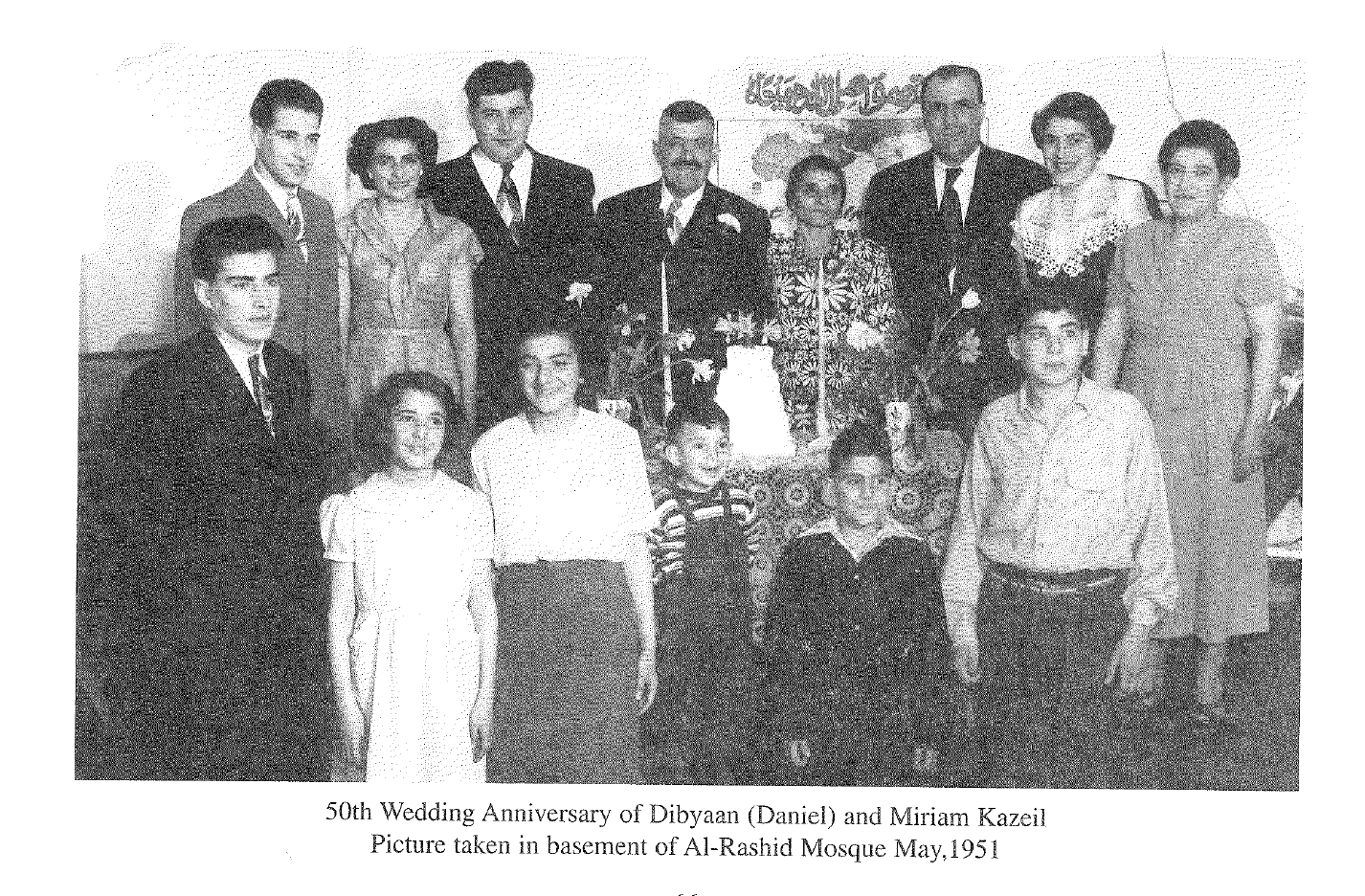
History, in other words, reveals complex negotiations, ones that may not be apparent on the surface. I like to say to my students that history, looking backwards, reveals a straight line. But, looking the other way—from the past, or even the present, into the future, reveals uncertainty. History helps us deal with such uncertainty. To embrace it, to learn from it and to tell its stories.
All this is by way of saying that Islamic History Month without archives is little more than Islamic appreciation month. And while some might like that idea, delight at the opportunity for dawa, it remains solely focused on the present—and we all know Muslims are here now. History, however, reminds us that a present only comes about from a past. And this is where MiCA comes into the picture. It is currently the only memory institution devoted to the collection, preservation and digitization of our collective past. MiCA thus helps to make Islamic History Month in Canada possible. While many leaders and politicians will inevitably acknowledge the importance of Canadian Muslims over the coming month, we must not forget the history explicit in the month’s designation.
Islamic History Month reveal us—ourselves, our parents, our grandparents and our great grandparents—as producers of Canadian Islamic history. We are the creators of our destiny. But, of course, we can do none of this without community involvement. History needs institutions and, in like manner, institutions need archives. And archives are not worth much if they sit unfulfilled and idle.
So, this Islamic History Month, we ask you to help us to tell our stories. This help can come in many forms. It can involve donating materials—letters, photographs, bills of sale and other memorabilia —often materials that many think are unimportant but that function as the lifeblood of any archive. We also encourage you to become involved in Muslims in Canada Archives activities (e.g., lectures, open houses). Together, we can ensure that Muslim history in Canada is not forgotten.
MiCA, after all, tells our stories. And, once documented, no one can take them away from us, try as they might.