Spotlighting Prominent Muslim Canadians: Hanny Assaf Hassan
September 3, 2026
Spotlighting Prominent Muslims in Canada is a new blog series where Professor Aaron W. Hughes merges his long-time studies of Muslims across the country with materials from our collections. The story of Hanny Assaf Hassan traces intercultural and interreligious understanding in London, ON and beyond.Hanny & Nejat Hassan.
The story of Hanny Assaf Hassan (1940-) is reminiscent of many of Canada’s first Arab Muslims and is certainly one that is familiar to me who grew up in such a community in Edmonton. Born in London, Ontario to parents who had come to Canada from what is today Lebanon, and the oldest of eleven children, the themes of Hassan’s narrative is that of dedication, finding Islamic meaning when little was available and, through both, contributing to the betterment of the larger Canadian society we inhabit.
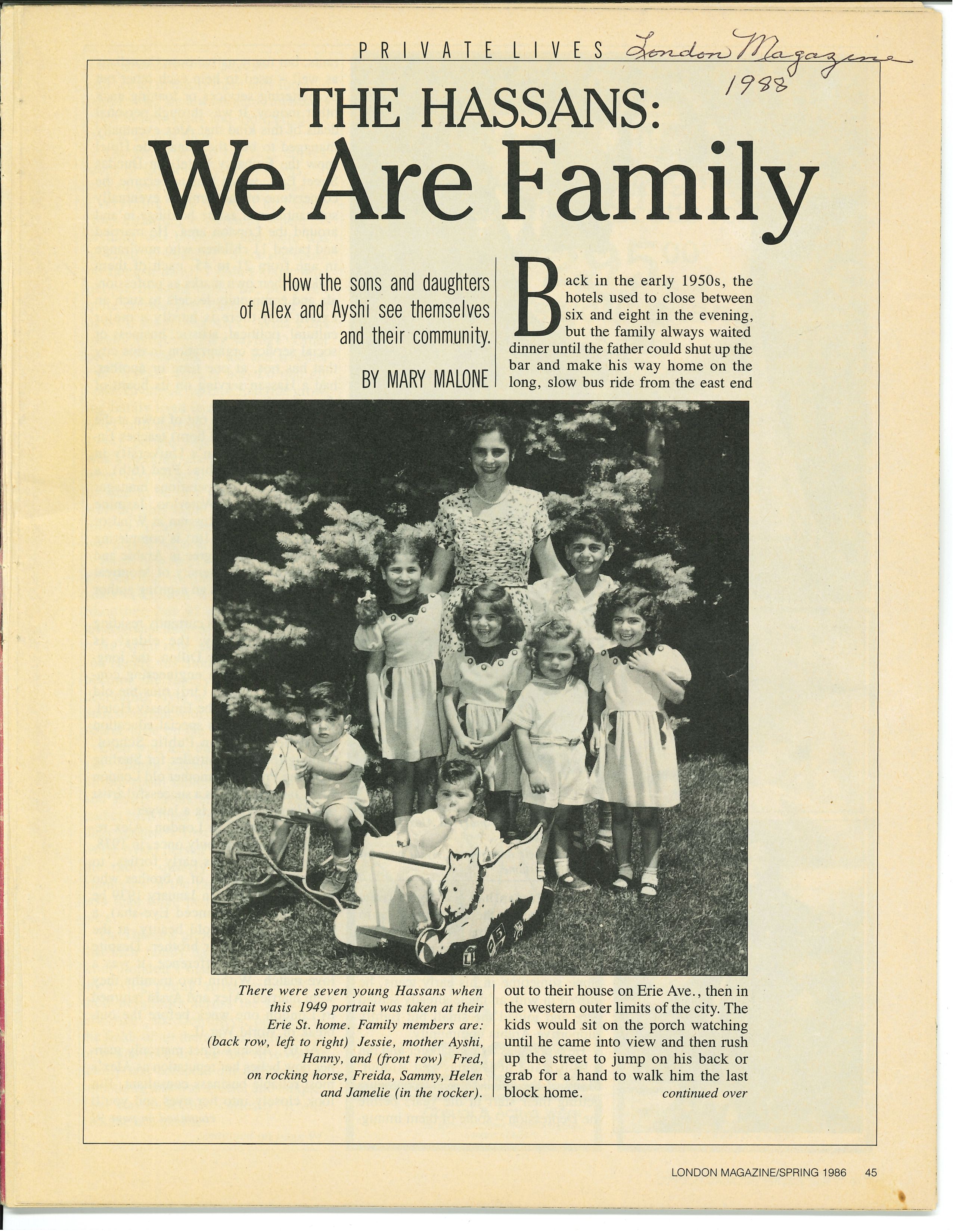
The wedding of Hussein Ali Assaf, known as Alex Hassan, and Ayshi Shousher published in a 1986 issue of London Magazine.
Hanny’s father, Hussein Ali Assaf, known as Alex Hassan, came to London in 1913 from Baaloul, Lebanon as a boy and subsequently returned in the 1930s where he met Ayshi Shousher. The two married and subsequently returned to London. Because of Canada’s strict immigration policy for non-whites at the time, the Hassans were among only a handful of Muslims in London when Hanny was born in 1940. There were only two Muslim families there at the time, one of which was Hanny’s paternal uncle’s family, in addition to a handful of individuals. By 1950, the number of families had doubled to four, with socialization occurring within and between those families and with Arab Christian friends of their parents. In addition to local civic and business concerns, discussion tended to revolve less around Islam than with their common Levantine identity. This mirrors what went on with my grandparent’s generation in Edmonton. Since knowledge of Islam was sparse, families tended to reminisce about what they had left behind. Arab culture was also something that all Arabs shared, regardless of whether they were Muslim, Christian or Druze.
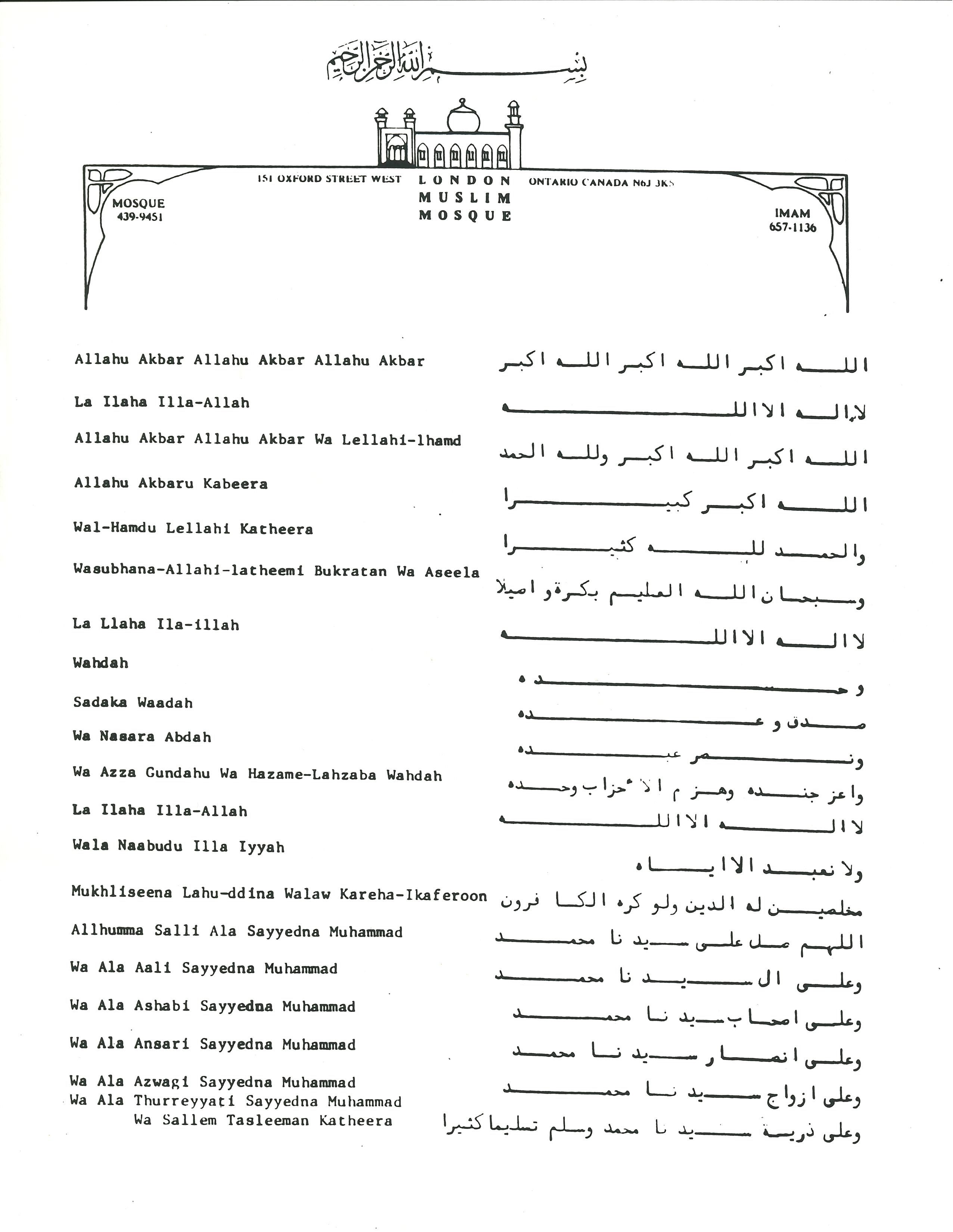
The 1940s and early 1950s saw the Hassan family sponsor different branches of the family to come to Canada and, by the mid 1950s, there existed close to a dozen Muslim families in London. Some of the new arrivals were disappointed with the lack of Islamic identity and this gave way to the formation of the Canadian Muslim Benevolent Society of London in 1952, one of Canada’s oldest. The society was also behind the erection of the London Muslim Mosque, Ontario’s oldest purpose-built mosque, in the following a fire in residential building that had been converted to a mosque.
The Hassan family, photograph published in a 1986 issue of London Magazine. Courtesy of Hassan family fonds.At a very young age Hassan became involved with the Muslim community of London. Since many of the adults in Hassan’s immediate circle had little or no formal education—his father, for example, though endowed with a keen business sense, had limited reading or writing skills—it fell to Hanny, as early as the age of 14, to become the society’s secretary and frequently its spokesperson, especially with small interfaith gatherings. This early exposure to working with other faith groups would serve him well for his later activities of encouraging relations between Muslims and members of other religious traditions.Like many of his generation, there were few place where Hassan could learn Arabic or about Islam. He did, however, manage to take Arabic lessons from a young man, Adnan Fadel, that came from his mother’s village, with a larger group that would gather in a classroom, in a space at a local high school by the London Board of Education from about 1952 to 1955. It was Haj Ali Kadri, the husband of his mother’s sister, and a hajji, who taught him and other young Muslims in London how to pray, shortly after he arrived in London.
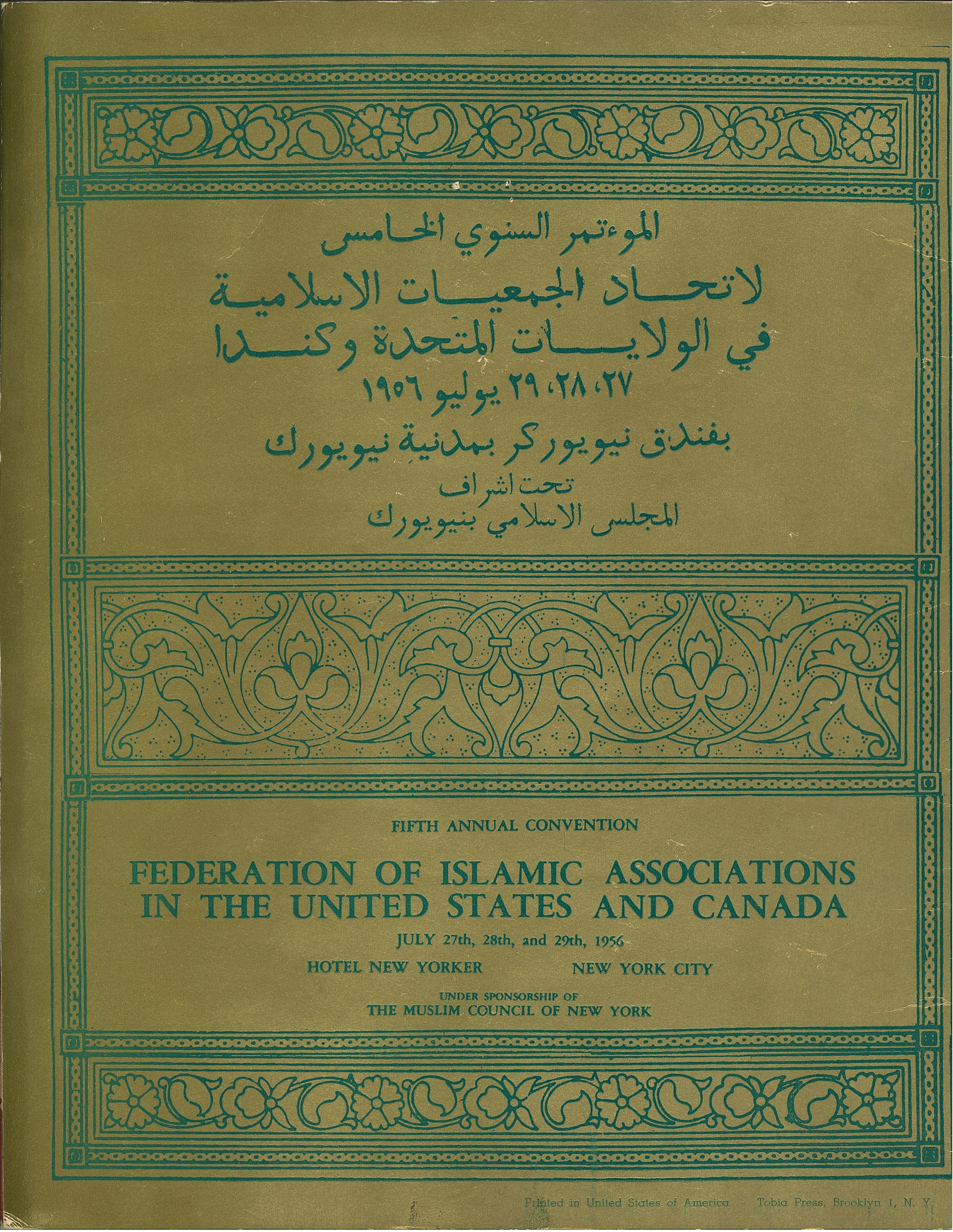
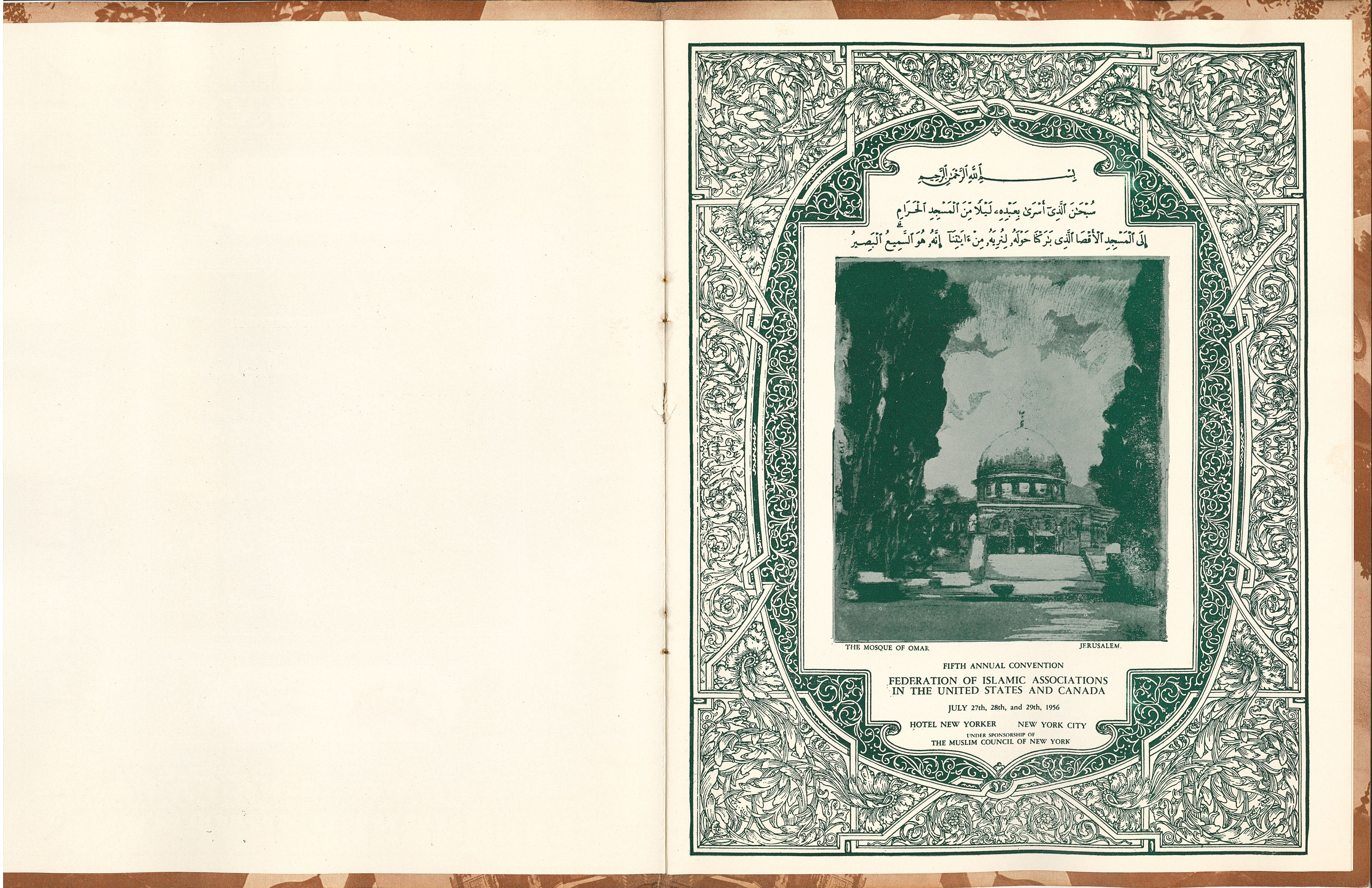
The Federation of Islamic Associations in the United States and Canada (FIA) was established in 1952 in Cedar Rapids, Iowa. Hassan’s parents attended that convention and several subsequent FIA annual events. At the FIA convention in Washington, DC in 1956, the FIA agreed to the formation of a youth subsidiary, The Islamic Youth Association of the United States and Canada (IYA). The FIA agreed that the president of the IYA would also serve as a vice-president of the FIA and two other members of the IYA would be designated as members of the FIA Board of Directors. Hassan was elected vice-president of the IYA and advanced to the Presidency when the elected IYA President, Yusuf (Joe) Aossey, took an overseas job.Federation of Islamic Associations in the United States in Canada program from 1956, courtesy of Hassan family fonds.In 1964, Hassan graduated with a Bachelor of Engineering Science degree from the University of Western Ontario and then moved to a job with the Department of Public Works of Canada in Halifax. During his years in Halifax, he also received a Master of Engineering from the Technical University of Nova Scotia (TUNS), now part of Dalhousie University (while also working part-time). While in Halifax, Hassan was also exposed to social justice issues, particularly those around Africville.
After departing Halifax, unable to find suitable engineering employment in London, Hassan moved to Toledo, Ohio. Toledo was then the home of his in-laws and of two of his maternal uncles. Toledo was also the location of one of the earliest mosques in the United States and an active Muslim community. He and his young family remained in Toledo for 7 years. There, he became involved with communal Muslim life, especially youth programming, and was involved with both the formation of the Islamic Youth Association of the United States and Canada and the local mosque. It was in the former organization that he met Najet Bedra who would go on to have a distinguished career with the London Muslim community, including its local chapter and executive of the Canadian Council of Muslim Women (CCMW).
In the Islamic Youth Association of the United States and Canada Hassan developed a Muslim summer camping program in 1958 that rented a camp owned by the Toledo YMCA and was held in Brooklyn, Michigan (60km southwest of Ann Arbor). For Hassan, and this would also define at least some of his subsequent work with the Council of Muslim Communities of Canada (CMCC), camping was an important vehicle for Muslim youth programming that met Muslim youth on their own terms as opposed to being filtered through the concerns of adults.
In a speech on the “Canadian Youth Camp Program,” delivered to the National Conference on Muslim Community Development in Chicago on 24 March 1978, for example, Hassan, who would play a key role in the early development of Muslim summer camps in Ontario, notes that “the stresses confronted by Muslim youth in North America are more intense than those faced by most other young people because they are a minority.” At the same time, however, he notes that the older generation’s response has often been far from adequate to confront, let alone assuage, these stresses. He continues:
The failure of adult leaders and other members of our communities to relate to the problems faced each day by Muslim young people has usually resulted in programs which to do not answer their needs. Perhaps it is difficult for an adult, whose childhood was in a Muslim environment, whose neighbours and classmates were the same as he, and who did not grow up as a member of a minority group to understand or appreciate the problems which our youth face in North American society . . . Recognizing and programming for the needs of the youth by the Muslim communities is the approach which will reinforce their attachment to the community and fulfill the desires of their parents.
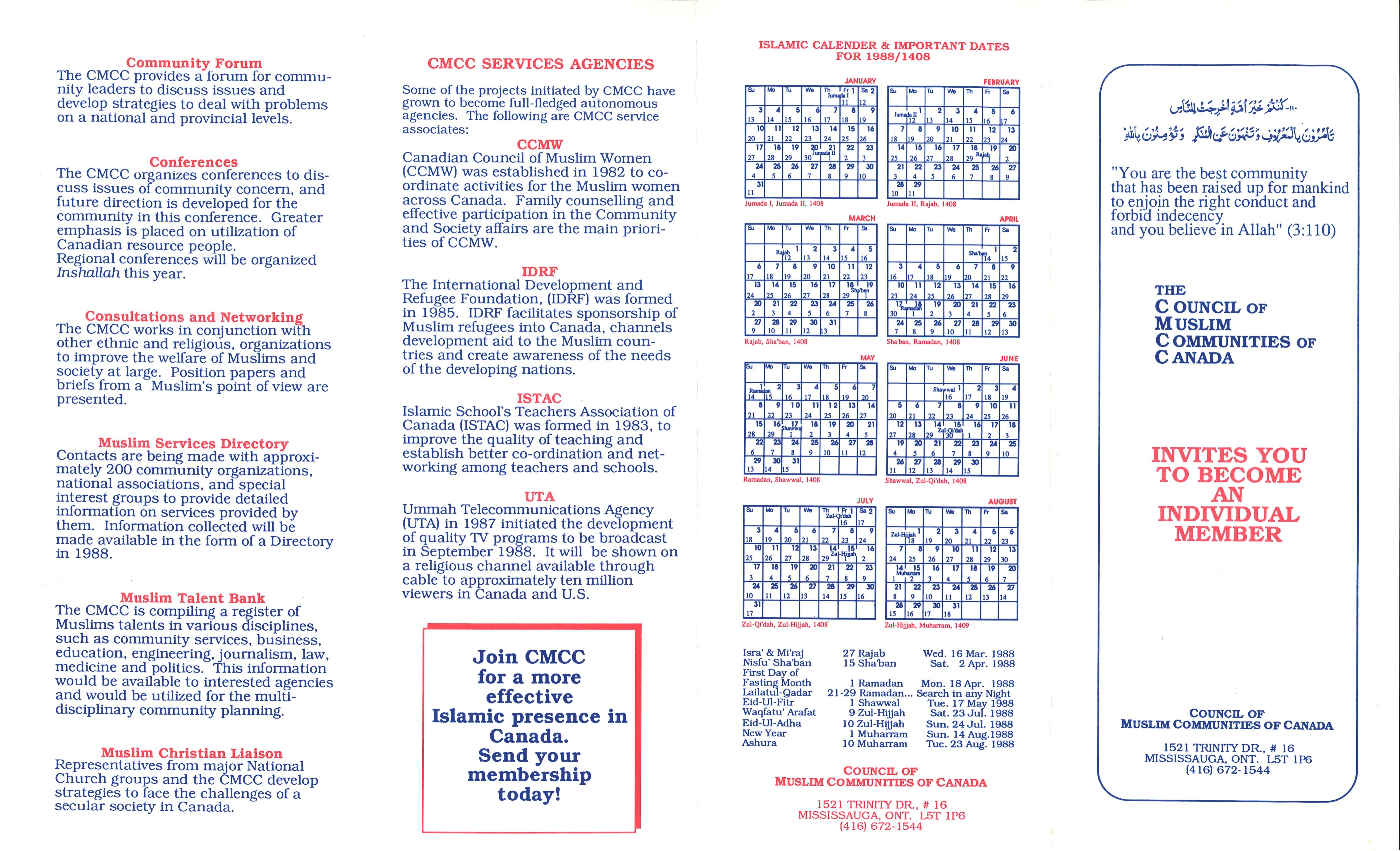
Hassan and his family returned to London from Toledo in 1974 when his dad was taken ill, at which point he became involved with the Council of Muslim Communities of Canada (CMCC), which had been founded in 1972, and he functioned as one of the organization’s last presidents.Council of Muslim Communities of Canada pamphlet, courtesy of Hassan family fonds.In addition to his engineering skill and business acumen as witnessed in, among other things, his being a former partner with Dillon Consulting, Inc. and president of Alef Consulting, Inc, we note his ongoing commitment to interfaith and community service work for past sixty years.
In this latter context, he served as director of the Canadian Dawn Foundation that gave Emmanuel College at the University of Toronto the seed money for launching the Muslim focus of the Master of Pastoral Studies program (which is now called the Master of Psychospiritual Studies), in addition to helping establish a Muslim prayer room and ablution facilities.
Hassan’s many awards and recognitions bear this philanthropic activity out. In 2011, he was named to the Order of Canada for his community work and contributions to promoting understanding between cultures and religions. He was made an honorary fellow at the University of St. Michael’s College at University of Toronto for his work in advancing Catholic-Muslim relations. He has received an Honorary Doctor of Laws honoris causa from Western University in 2023. Western’s Alumni Association also gave him its highest award, the Dr. Ivan Smith Award, in 2019 for significant and sustained contributions to the Alumni Association, The University of Western Ontario and society in general. And, in 2025, Hanny was awarded an Honorary Doctorate of Humane Letters from Victoria University in the University of Toronto.
From an early age, Hanny Hassan’s life has been devoted to bringing people of different religions and cultures together so that they might better understand one other. He is also deeply committed to removing the conditions that lead to poverty, to violence against women and to combatting xenophobia. His overarching commitment to these noble goals derives from his early work with the London Muslim Mosque. Upon receipt of his honorary degree from Victoria University, he remarked how this is “an important demonstration of our shared humanity, particularly at a time when voices of division are so loud.”
Professor Aaron W. Hughes is the grandson of Mohamad and Maryam al-Noghedi (aka Bud and May Alley), one of the founding families of Canada’s first mosque in Canada, Edmonton’s Al-Rashid (1938). Trained in classical Islamic texts, he now works on the history of Muslims in Canada. Aaron is also academic advisor at the Muslims in Canada Archives (MiCA), where he draws from our collections to further his research. Learn more about the blog series.